


What if a single engineering project could change the way a country grows? That’s exactly what the Snowy Mountains Scheme did.
Stretching across the Australian Alps, the Snowy Mountains Scheme captured snowmelt to provide water and electricity while shaping national policies, fostering innovation, and supporting Australia’s modern economy and multicultural society. Based on a research article by Dr. Anthony Turton, this article explores how the project was planned, built, and its lasting impact on the nation – starting with the ambitious vision that made it all possible.
Planning for a Growing Nation
Rebuilding a nation is never simple. In the years following World War II, Australia faced obstacles that shaped how it could grow. Vast distances, a complex political system, and limited infrastructure meant that any large-scale project required careful planning and coordination.
Early Challenges
After World War II, many countries in the British Commonwealth were changing rapidly as returning soldiers brought back new ideas and experiences from overseas. Australia, like South Africa, was ready for fast development, but it faced several challenges that shaped how the nation could grow. Some of these challenges included:
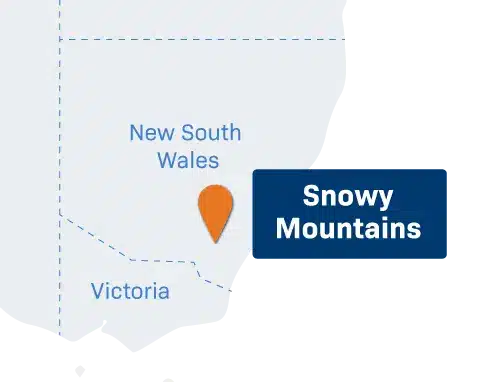
- A huge and mostly dry land – Australia is a vast country, and much of it is dry land. With people and towns scattered across long distances, development was uneven, which made infrastructure planning a significant challenge.
- A complex political system – Australia consists of several states, with each managing its own affairs. The federal government then had limited authority, which makes it harder to coordinate projects across the country.
- Limited infrastructure – Along with its size and political complexity, Australia had no national electricity network after the war. The long distances between towns and scattered population made building a unified system a significant challenge.
Laying the Groundwork
Overcoming these challenges requires careful planning and coordination. The Snowy Mountains Scheme was designed to provide both water and electricity to support the nation’s post-war growth while addressing the different needs of each state: New South Wales sought water for irrigation, Victoria required electricity for industry, and South Australia aimed to protect downstream rivers. At its core, the project’s purpose is to divert snowmelt from the Australian Alps into the Murray and Murrumbidgee Rivers to create water security for agriculture and a reliable source of hydroelectric power to fuel national development.
To make the project work for all states, the federal government established a special committee in 1946 to evaluate competing demands, conducted detailed cost-benefit studies, engineering feasibility, and passed the Snowy Mountains Hydroelectric Power Act in 1949, which created the Snowy Mountains Hydroelectric Authority (SMHA). This careful planning not only resolved the legal and institutional challenges between New South Wales, Victoria, and South Australia but also laid the foundation for the next stage: constructing the dams, tunnels, power stations, and roads that would bring the ambitious vision of the Snowy Mountains Scheme to life.
Building Big and Smart
With planning in place and laws guiding every step, construction began on one of Australia’s largest and most ambitious engineering projects – a feat that reshaped landscapes and transformed agriculture.
Leadership Made it Possible
The Snowy Mountains Hydroelectric Authority (SMHA) took charge under the leadership of William Hudson, a highly respected engineer from New Zealand. It coordinated every aspect of the project to ensure it progressed systematically, along with guidance from the United States Army Corps of Engineers and funding from the International Bank for Reconstruction and Development. With this, the Snowy Mountain Engineering Corporation (SMEC) was also established to preserve the knowledge gained for future infrastructure projects.
Scale and Global Workforce
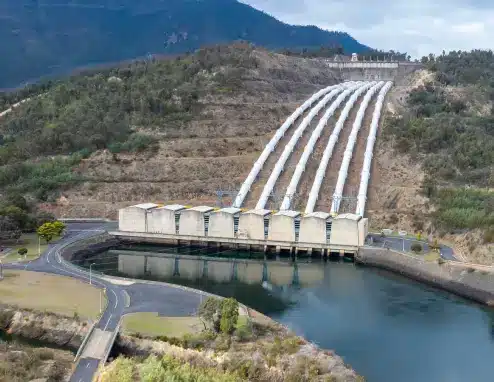
The scale of the project was enormous. It included 16 dams, seven hydroelectric power stations, 145 kilometers of tunnels, 80 kilometers of pipelines, and 1,600 kilometers of roads, connecting seven townships and over 100 construction camps. Remarkably, only about 2% of the project was visible above ground, which highlights the vast amount of engineering hidden beneath the surface. Carrying out such a massive undertaking required an international workforce of around 100,000 skilled workers from 32 European countries, wherein many of whom had previously been at war with each other. Their efforts also helped shape Australia’s multicultural society. To coordinate this large workforce across multiple construction sites, engineers used Snowcom, one of the first transistorized computers, to schedule work and keep the project on track.
Powering the Nation
The Snowy Mountains Scheme didn’t just transform the landscape; it brought water and energy to millions of Australians that supported agriculture and industries while laying the groundwork for future development. Its key contributions include:
- Water for Agriculture – Redirects snowmelt into the Murray-Darling Basin, delivering over 2,100 gigalitres of water annually. This supported around 40% of Australia’s irrigated farming and strengthening national food security.
- Energy for Growth – Generates hydroelectric power for homes and industries, establishing a regional energy network that boosted economic growth and improved access to electricity.
- Foundation for the Future – Provides a platform for future energy developments that includes the Snowy 2.0, expanding hydroelectric capacity and supporting Australia’s renewable energy strategy.
Balancing Growth & Nature
The Snowy Mountains Scheme brought tremendous benefits, but it also created environmental challenges that required attention:
- Changed River Flows – Diverting snowmelt into the Murray-Darling Basin have altered natural stream flows. This created downstream impacts that affected water availability and ecological balance.
- Wildlife Impact – Habitats for species such as the platypus and other aquatic life were disrupted, which prompted concerns about biodiversity and the need for ecological protection.
- Cumulative Downstream Effects – Decades of water diversion and hydroelectric operations caused complex impacts on river systems and wetlands.
To address these issues, Australia implemented Instream Flow Requirements (IFR) and environmental flow policies were later introduced, returning variable proportions of natural flow regimes to affected rivers to improve ecological health and rive function. These measures not only mitigated the Snowy Scheme’s impacts but also set international standards for river management and ecosystem restoration that influenced water policies worldwide.
The Snowy Mountains Scheme shows that with vision, planning, and teamwork, even the biggest challenges can be turned into lasting benefits for the environment and for all of us.
References
Snowy Mountain Scheme – Dr Anthony Turton – Circular Conversation