


Innovation in engineering education is recognizing the leaders shaping the future. Dr. Akhlaqur Rahman has earned such distinction by winning the Digital Transformation Excellence Award at the 3P Impact Awards that was presented during the 3rd International Conference on Recent Trends in Data Science 2026 in India.
This award celebrates Dr. Rahman’s groundbreaking IoT Remote Lab Project at the Engineering Institute of Technology, a solution that allows students to conduct real-time engineering experiments remotely. By removing traditional barriers, his project is transforming engineering education and making hands-on learning accessible to students worldwide. This article features Dr. Akhlaqur Rahman and his remarkable achievement in winning the Digital Transformation Excellence Award. We explore how his IoT Remote Lab Project is reshaping engineering education, offering new opportunities for students and educators alike.
Global Innovation Spotlight
Digital breakthroughs in education are highlighting visionaries who make learning accessible worldwide.
In this context, Dr. Akhlaqur Rahman stands out for his award-winning work, which demonstrates how technology can make engineering education more accessible, practical, and globally connected. When asked about the significance of receiving the Digital Transformation Excellence Award at the 3P Impact Awards during the 3rd International Conference on Recent Trends in Data Science 2026, Dr. Rahman reflected on both personal and professional impacts.
“This recognition is both personally fulfilling and professionally significant,” he said. “It validates the effort invested in advancing innovative teaching and remote lab design. For me, it reflects the impact of bridging theory with real-world engineering practice. Professionally, it strengthens my commitment to digital transformation in engineering education and motivates further innovation.” The motivation to present the IoT Remote Lab Project was equally clear. “The IoT project, developed in 2025, represents the hard work of multiple academics and the IT team who prepared a project that enables students to access real industrial systems remotely. The IoT Remote Lab demonstrates practical, hands-on learning beyond physical classrooms. I wanted to present this as a model for a modern E-Learning approach to engineering education globally,” Dr. Rahman explained.
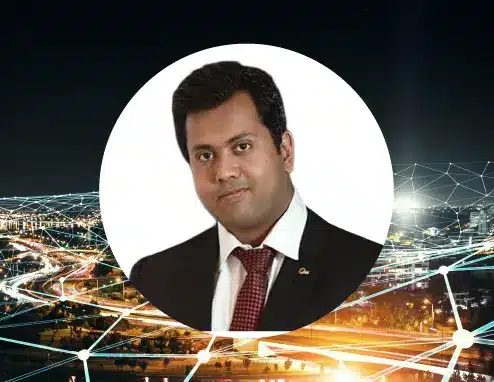
Building on this innovative work, Dr. Rahman is an Academic Course Coordinator and Lecturer for the School of Industrial Automation at EIT’s Melbourne campus. He is also a member of IEEE and Engineers Australia (MIEAust), bringing over eight years of teaching experience across Bangladesh, Australia, and online platforms. Throughout his career, he has been at the forefront of integrating digital technologies, and his efforts not only strengthen EIT’s mission to deliver globally relevant education but also sets a benchmark for educators worldwide.
Inside the IoT Lab
Hands-on, practical experience remains essential in engineering teaching and learning, and initiatives like the IoT Lab are making it more accessible than ever.
When asked how the project works and what technologies make it accessible to students, Dr. Rahman explained, “The IoT Remote Lab allows students to control real hardware through an online platform (IoT Gecko), which is accessed through EIT’s remote lab. A user sends commands via the web interface, which are transmitted over the internet to a Raspberry Pi connected through a Wi-Fi hotspot. The Raspberry Pi processes the command using Python and activates relays to switch devices like lamps or fans. Live feedback is provided via camera and LCD display, enabling remote experimentation. As the local PC that’s connected to the project has a remote lab capacity, students can use the remote lab portal to access the PC and work on the IoT kit project.”
On the potential of IoT in transforming engineering learning, he added: “This project demonstrates how IoT connects cloud platforms with physical devices in real time. Students can interact with actual equipment remotely, not just simulations, making learning more practical and engaging. It mirrors real Industry 4.0 systems where remote monitoring and control are standard. This shows how IoT enables scalable, flexible, and location-independent engineering education.”
This dedication to enhancing teaching and learning is reflected not only in his projects but also in Dr. Rahman’s extensive roles at EIT. He serves as an Academic Coordinator for Industrial Automation (IA) courses, including the Bachelor of Industrial Automation (BIA) and Master of Engineering (Industrial Automation) (MIA), and acts as an IA expert for VET courses and the Doctorate program (DEng). Dr. Rahman also contributes broadly to EIT’s governance and academic quality as a member of the Course Advisory Committee in Master of Engineering (Electrical Systems) (MEE) and Master of Engineering (Industrial Automation) (MIA), the Board of Studies, the Learning and Teaching Committee, the Admission Committee, and the Research Committee.
Driving Digital Transformation
Digital transformation in engineering learning is offering new ways to connect theory with real-world practice. By integrating technology, educators can create flexible and industry-aligned learning experiences for students everywhere.
Reflecting on this, Dr. Rahman explained what motivated him to develop remote laboratories: “While digital solutions like remote labs offer new ways to support engineering learning, they also come with challenges. I was motivated to develop remote labs to ensure students could gain practical, hands-on experience regardless of their location. The goal was to create a system that bridges theory and practice while keeping learning aligned with industry standards.”
He also highlighted how these innovations enhance the learning experience, “Innovations like remote labs allow students to interact with real equipment and systems, rather than relying solely on simulations. Despite the challenges, this approach ensures learning remains practical, engaging, and scalable.”
Igniting Future Engineers
Preparing the next generation of engineers requires hands-on learning and innovative guidance from lecturers who embrace digital technologies.
When asked what he is most looking forward to as digital technologies continue to reshape engineering learning environments, Dr. Rahman shared: “I’m most excited about fully immersive and connected learning environments where students can interact with real systems through AI, IoT, and digital twins. These technologies will make learning more personalized, adaptive, and industry aligned. The ability to simulate, monitor, and control systems remotely will further bridge theory and practice. Ultimately, it will produce engineers who are better prepared for real-world challenges.”
He also offered advice for educators and researchers exploring digital innovation, “My suggestion would be to start with scalable, sustainable solutions such as cloud labs, simulations, or data-driven learning tools. Then collaborate across disciplines and industry to ensure relevance and impact. Most importantly, be willing to experiment, iterate, and learn from failures – digital innovation is an evolving journey, not a one-time implementation.”
Through his vision and leadership, Dr. Rahman continues to inspire both students and educators at EIT, showing that technology-driven learning is essential for developing skilled engineers ready to meet the demands of an evolving industry.